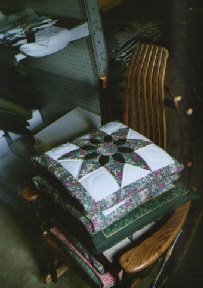
Have things changed ... or are they just the same? Welcome to the House of Electrofried where time becomes a loop
Saturday, November 25, 2006
Loud music - Soft drinks
Dear Chroniclers,after a whirlwind weekend or two, we're taking some time off tonight to put our feet up.
It all has to do with teenygoth's ASBO'n'soft drinks Youth Group at our local parish church in Little Wittering, of which more later.
Pickled and mixed
Regrettably, I have to report that Cook has taken the opportunity to launch yet another spirited attack on the House gin supplies. She's currently to be found sashaying around the TV Room doing the televisual equivalent of a karaoke to "Strictly Come Dancing" whilst draped in an alarming selection of pastry-cutters from the kitchen.
To compound the problem, Fetlock the Butler has recently emerged as triumphant winner in a protracted e-bay auction for a box of mixed turnips. They arrived, mail order from his native Slovenia, earlier this week and he's upstairs in the garrett peeling off the bubble-wrap as we speak. Fetlock intends to put the wretched things to good use shortly, having misguidedly promised to assist Cook with the preparation of Sunday lunch.
The omens, frankly, are not good and a certain unease has already settled on the House as to what the two of them may concoct come the morning. Turnip fritters appear a distinct possibility.
A new mission
Enough of our trials and tributlations - let's return to the theme for tonight's pasting.
Perhaps out of concern as to Cook's ongoing alcoholic challenges, or maybe a little closer to home, a general malaise concerning our own state of moral turpitude, but both mrs electofried and I have been contemplating a change of ministry for some time now.
Whilst mrs electrofried's regular dj slot at our local Women's Institute (the infamous "Loud, Proud and Homebaked") and my own irregular talks to the great unwashed of Little Wittering continue to enjoy a certain following, it has become abundantly clear to us of late there is much need to do more.
The chosen path
"You're kidding me!!!!", was teenygoth's immediate response.
We took this as positive affirmation following mrs electrofried's announcement that we were shortly to join the leadership of the Youth Team at St Simeon's, the Church for the Terminally Bewildered Anglican in Little Wittering.
Regrettably, for teenygoth at least, we weren't and we have ... and great fun it is too!
Windy vantage
The Church for the TBA is to be found at the top of a large hill, overlooking the market square below. Most weekends the youth of the village can be found gathered at this dark and windy vantage point, swapping homework notes on such interesting subjects as Chemistry, Biology and the like.
Evidence of their study is invariably to be found behind the Chancel wall come Sunday morning services, but is usually removed fairly speedily by the Verger before the first of our dear ladies arrive for Matins.
There is however, a new attraction on the hill!
Open for Business
After months of powerful and intense liturgical debate concerning its name, the imaginatively titled, "St Simeon's Church Centre" has opened once more for business. It's a 1950's warehouse of a thing, recently refurbished with copious quantities of EEC money and now suitably bedecked with fancy electronic doors, a new plumbing system and a kitchen clearly designed by a male dwarf with a wicked sense of humour.
And it is here mrs electrofried and I now ply our trade to the passing and frankly bemused young-folk of Little Wittering.
Musical Youth
Opening events for the Centre focussed on all things musical and I'm delighted to say yours truly was asked to fetch out the Box brownies and a box of freshly emulsioned glassy plates.
Mrs electrofried too, was pressed into early action - her role being to crew the lighting rig cunningly fashioned from a torch masked with various coloured wrappers purloined from a half-emptied tin of her beloved Quality Street.
A specimen example appears above - the "Vanilla Fudge Special", if memory serves me correct.
Tales to follow
I sense that as our ministry unfolds there will be much to share with you. Already, after just four weeks in situ, the weekends have sped past in a blur of loud music, soft drinks and general chit-chattery with a burgeoning and highly diverse group of young-folk - some churched, many not.
However, the lure of "X-Factor (reloaded)" calls to me from the TV Room. And I suspect from the loud crash within that poor Cook's karaoke has hit the bumpers yet again.
best regards
electrofried (mr)
Monday, November 20, 2006
Saturday, November 18, 2006
The heart of good and evil
Dear Chroniclers,this is the last in the series of "Adventures across the Pond". It will be the shortest too, for the actions of the people will speak for themselves.
Helicopters overhead
When we first came into Lancaster on our tour charabanc we saw helicopters flying overhead. We thought nothing of it until we switched on the TV that night in our hotel room.
Preparations
A local milk-truck driver called Charles Carl Roberts IV had pulled up his truck outside an inconspicuous Amish schoolhouse in Nickel Mines three hours before we arrived. It was one of his regular deliveries.
Roberts had prepared his visit meticulously for at least six days beforehand, ticking off a list of items he would take into the schoolroom with him. These included:
- three guns;
- a stun gun
- a bag with 600 rounds of ammunition;
- a piece of wood pierced with ten eyebolts spaced ten inches apart; and
- a set of plastic bindings.
There were other things he took into the schoolroom with him.
The heart of evil
Roberts did not emerge alive. Instead, he tied up ten Amish schoolgirls by the blackboard, shot them at close range then put the gun to his own head.
Five of the girls were killed outright, three left in a critical condition and the remaining two seriously injured. They ranged in age from six to thirteen.
The heart of good
The Amish buried their lost girls quietly and as a community. They invited the family of the killer to the funerals, believing they too were victims. They will be sharing the money raised in the wake of the tragedy with the family.
Our last day
On our last full day in Pennsylvania we went into the heart of the Amish community. Here are three memories we carried home with us:
- the Amish grandmother who greeted us, full of joy, to her quilt-shop. She had three grand-daughters who attended the schoolhouse - one escaped, another was in hospital, her shoulder shattered, the last had just been buried. She harboured no hatred.
- the ninety-six year old Amish man who showed us around his simple workshop where he still makes the most beautiful furniture.
- the faces of the straw-haired Amish children who ran out to welcome our charabanc as it pulled up outside the farmhouse where we ate our penultimate meal in Pennsylvania. They greeted us with smiles and waves - the road, just a stone's throw from the schoolhouse, has just been re-opened by the police.
There are tears in my eyes as I type these last words and close the book on our visit. It is the meaning of the grace of God that we saw first-hand in the Amish who carried this message so very faithfully.
The last words are from Him ...
"We know that in all things God works for good with those who love him, those whom he has called according to his purpose."
Romans 8:28
Wednesday, November 15, 2006
Going for a song!

Dear Chroniclers,
so here we are again. Take a seat next to me on the hard wooden bench and listen awhile to a lilting song - you'll soon pick up the rhythm if you just let your ears grow accustomed. It starts something like this ...
"tayneantayneantayne ... nowtayneanfiveantayneanfiveantayneanfive!"
The chanted pattern enfolds us and before we know it, we're drifting back in time.
American Gothic
Strasburg is a small "chocolate-box" of a town some fifteen minutes from Lancaster City - the houses that line the main road through its heart are smartly painted and well-kept. One, in particular, catches our eye.
The house in question is set back a little from the road and, unlike its neighbours, it sports a small railing fence delineating the start of a well-manicured garden. Beyond that lies a brick-built mansion. It's flanked on either side by two imposing circular tower-wings, both of which are pierced at regular intervals by a series of leaded-windows.
We pause for a second to admire this American Gothic beauty then pass on by. It's not what we've come to see.
Off Main Street
As the sun begins to fall in a late afternoon sky, we travel a little further west along Main Street then take a left down a small, non-descript turning. A few hundred yards through a picket of white clapper-boarded houses and now it's sharp right.
We've arrived! 203 W Franklin Street - home to the Strasburg Fire Company.
Forgive me for a second if I pause to take a few photographs - unfortunately, I won't be able to get out my camera tomorrow morning as the Amish will be here in force, so I'll take my opportunities while I can. I won't be long - why not go in and take a look around in the meantime?
Exploring the Firehouse
The approach to the firehouse takes you past a swathe of freshly-mown grass and a flag-pole with its stars and stipes lowered to half-mast in respect. There are four huge glazed doors at the front with a vehicle stationed behind each. A simple white sign runs the length of the building just beneath the flat-roofed top. It bears the title, "Strasburg Fire Company No. 1".
You find the Visitors Door. Straight in, then past the Command Office by the entrance and you come to a row of heavy-duty metalled hangers - each bears a thickly padded fireman's uniform and the ubiquitous yellow hat. Their owners are nowhere to be seen.
Buffed and polished
The main hall now lies before you. The newly commissioned, "County Station No 50 -01" boasts two fire-engines, a 3,000 gallon tanker and a Chevy 4x4 Crew Cab and all of them have been buffed and polished until their red-lacquer paint gleams spotless.
You see your reflection in the immaculate chromework ... and just behind you a shadowy figure holding a camera.
"Click!"
I'm so sorry, I shouldn't have crept up behind you like that. I do hope I didn't startle you. Take a few moments to get your breath back then follow me - there's something else I want to show you.
A Feast of Quilts
We walk to the far end of the firehouse where two huge metal frames have been erected, one on each side of the hall. Both are clad in hundreds of hand-crafted quilts, from which just four of the very best have been carefully selected for mounting on the end wall.
The display is a dazzling kaleidoscope of colour and pattern. Stars, zig-zags, fabric leaves, rough-cut patches and smooth creamy rows of hand-stitched embroidery all melt dizzyingly into one. It's more than we can take in.
The unpacking of parcels
We watch as, one by one, the members of our tour party unfurl the packages they've transported across the Atlantic. Each new item is named, catalogued and added to the assembled racks of quiltery.
Mrs electrofried's turn arrives and we bid a fond farewell to "Lancaster Dream" as it joins the display - a wall-hanging in autumnal brown and yellow that she's been working on for weeks.
It's time to go now, but we'll be back again, come the morning, for Strasburg's legendary Annual Quilt Sale.
Custom and Tradition
Like many rural towns in America, the vast majority of the buildings in Strasburg are timber-framed, so an effective fire-fighting capability is essential. However, across in the States much of the fire-service is maintained on a voluntary basis.
Fund-raising events accordingly play a vital role in sustaining the service. In the case of Strasburg, the legendary Quilt Auction has been at the heart of its fund-raising endeavours for many years. It's an event organised by the Amish as part of their contribution to the wider community in which they live.
And there's another long standing tradition - visiting quilters from England bring with them a piece of work to be entered in the sale. So for now, all we need is a good night's sleep and then we can return first thing tomorrow to experience the Auction first-hand.
Sitting on the bench
I do hope you're feeling refreshed - it's going to be a long but fascinating day.
We're back once more in the main hall of the firehouse, only this time it's populated by a steadily growing audience. We take a seat towards the back, on one of fifty or so wooden benches brought in overnight by the Amish. They use them for their fortnightly religious services and they're just as uncomfortable as the typical of Anglican church-pew, though conceivably occupied rather more regularly.
It's only ten o'clock, but already the hall is almost two thirds full. Next door there's a sale of Amish-made furniture and toys, and it too is doing brisk business. The auctioneers on either side of the thin dividing wall do battle to be heard with competing whoops and cries.
Let's settle down and let our ears get accustomed to their rhythmic cadence. Do you remember the start of the song?
"tayneantayneantayne ... nowtayneanfiveantayneanfiveantayneanfive!"
The team gets to work
We watch in fascination as the Amish auction team get to work. The smaller items go on sale first and for this five players are sent out - one auctioneer, two spotters, the book-keeper and the deliverer. Each one weaves in and out of the tableaux before us in a carefully orchestrated dance.
The auctioneer commands centre-stage. He grips the sides of the stand and peers over it like a judge at court, gavel in hand. It's his dipping and barking chant that provides music to the movement.
The spotters stand on opposite sides of the room - two gnarled football managers, each goading on his team to victory. When his side is ahead in the bidding, the spotter rolls a folded Auction catalogue round and round in the air - the sign to keep watch for a competing bid from the opposition. Meanwhile, the opposing spotter will jab a similarly folded catalogue toward his team, seeking to tease out a higher bid that will win the day.
And so battle is done - a mesmeric chant and alternating movements of folded catalogues, rolling and jabbing as the bidding war passes from one side of the room to the other - until at last the victor emerges.
The book-keeper records the number of the successful bidder and the spoils of victory are promptly delivered by the final member of the team.
A pretty bonnet
This pattern is repeated time and again as the smaller items are struck, line-by-line, from the catalogue. Pillows, wall-hangings, linings and fabric bundles are all swallowed up by the sea of bidders, many of whom have travelled across State to join the Auction.
One moment of humour interrupts the flow briefly when a rather fetching pink bonnet comes up for sale. The deliverer seizes the opportunity to remove his traditional Amish straw headgear and replace it with the bonnet in question. He earns much laughter and a round of applause from the audience, and we suspect a "ticking off" to follow from his elders.
Noon fast approaches and we await a special announcement from our auctioneer.
Cousins across the Atlantic
At length the sale of the smaller items comes to an end. The Amish auction team has been rotated twice and now the original members return to take their place to host a special slot that has become part of the tradition for the day.
The English quilts are introduced to a round of applause and much blushing from the assembled tour party, all of whom have returned to see their handiwork go under the hammer. "Lancaster Dream" comes up toward the end and mrs electrofried is delighted to learn she's raised $95 to support the fire-service. Job well done!
Raised high
Now the smaller stuff has been despatched and the English sale completed, the time has almost come to bring on the stars of the show.
The charged atmosphere in the hall goes up several notches as a fresh Auction team steps up, this time supplemented by two further groups of young Amish girls. They take up position on each side of the auctioneer as two matching sets of pulleys and ropes are lowered from the ceiling. Their purpose quickly becomes clear as the first large quilt from the rack is pegged to a fixing bar and hoisted high up in the air for all to see.
The chant resumes and we're off once more ... only this time the bidding goes into hundreds, rather than tens, of dollars. Even so, there are bargains to be had aplenty. Last year the best quilts raised in excess of a thousand dollars each, now they struggle to achieve a little over half that figure.
Mrs electrofried enters the fray
Of course, mrs electrofried is not to be denied. Family savings have been scraped together and a small non-interest bearing loan of Slovenian Tolars extracted under duress from Fetlock the Butler. And now the purse lies in her tender care.
Her first purchase is a navy, rust and cream log-cabin quilt. The hand-stitching in part can best be described as "rustic". Mrs electrofried believes the quilt may well have been worked up by an Amish mother and a young daughter, which only adds to the charm of it.
An hour or so later the girls manning the pulley on the right-hand side of the hall hoist up another log-cabin quilt, this time in green and cream. Poignantly, the middle panel depicts an Amish schoolhouse. Under instructions I raise my hand once, twice, then a third time and as the bidding closes the auctioneer calls out for our number to record in his book.
For many reasons, this quilt will provide a focus for prayer in our House - it lays upstairs as I type, ready to be put on our bed.
A long day comes to an end
Once more the sun begins to fall and it's time to make our way back to the charabanc. Our heads spin with dizzying patterns, colours, dances, rotating, jabbing catalogues, whirring pulleys and ropes - all the while accompanied by the rhythm of this song. I believe you may know it by now, it goes ...
"tayneantayneantayne ... nowtayneanfiveantayneanfiveantayneanfive"
yours as ever,
electrofried (mr)
Saturday, November 04, 2006
Sunday, October 29, 2006
On Breakfasts and Battle-fields
Dear Chroniclers,welcome back to the continuing adventures of the electrofrieds, deep in the heart of Pennsylvania. You join us just as breakfast is about to be taken ...
Full stomachs for the day
Unaccustomed, as yet, to the "coronary-on-a-plate" helping typical of American portion control we dig deep into the assembled troughery.
We choose fruit to start. Succulent red water-melon, a fast-emerging favourite of teenygoth, is stacked high on her plate. We assume it must be in preparation for her hollowing out some frightful pumpkin mask come our return to Old Blighty.
Whilst she chows on down, mrs electrofried and I exchange pleasantries with the catering staff. To a person, they are unfailingly civil, welcoming and genuinely interested in service with a capital, "S". In other words, the diametric opposite of our loyal, but frankly deluded, retainer - the execrable Fetlock.
Having been "happy-dayed" to our hearts content we resume foraging duties and set off in search of the next course.
The perils of American bacon
I do not know if you have encountered American bacon before, but to the uninitiated it is a most bewildering thing. First, the wretched stuff is cut so ephemerally thin that were it to feature on the breakfast menu at the House of electrofried, one decent blast of tobacco-flecked spittle from dear Cook would despatch it, coughing and spluttering, to its Maker.
Were that not bad enough, those responsible for its presentation have chosen to pile the stuff several layers deep in a silvered turine. It resembles nothing so much as a complex work of pork-based macrame and my tentative insertion of the serving fork into the heart of this tangled web only serves to make matters worse.
Let battle commence
My goal is to extricate a rasher or two for consumption alongside a mild smattering of scrambled egg. It is not, however, to be. The serving fork emerges from the fray loaded with a writhing mass of intertwined bacon threads all of which seem intent on knotting themselves ever tighter around its prongs.
Herein lies the dilemna. Is it good ettiquette to remove by hand the surplus pig-meat, or should one accept one's fate gracefully and disgorge the entire contents onto the waiting plate?
I chart a course mid-way between the two, surreptiously returning half the pay-load to the open turine before slinking off to our table with the remainder stacked high. Teenygoth greets my arrival with her customary derision.
"Cor, Dad - you moving up a belt at your Sumo class or what?!!"
Her barbed remark is waved off contemptuously and I tuck into my breakfast. Big mistake. The bacon has been cooked to a crisp and as my knife makes contact with the toppermost layer an explosive shower of porcine-shards covers a fall-out zone extending some ten metres from our table.
Teenygoth giggles, but even now, I await fearfully the launch of a class-action from litigious American diners caught up in the piggy-crisped maelstrom.
En Charabanc
Breakfast over, we board the tour charabanc.
There is a certain blissful magic to travelling the backroads of America ensconced in the richly trimmed plastic mouldings of a fabled "Bluebird". It's driven by the seventy-year old Glen, our sharp as a pin chauffeur. If anything, he looks in better shape than the charabanc itself.
Several of its internal fittings hang at interestingly jaunty angles, unrestrained by long-lost fixing-screws that doubtless have been swallowed up some time ago in the swathes of shag-pile carpeting underfoot. One fears that any rapid braking motion on the part of our driver will lead to a complete collapse of the interior in a fashion not dissimilar to the untimely despatch of my breakfast bacon.
Crossing the Susquehanna
I take up station toward the rear of the coach and scribble random thoughts of our introduction to the Amish in my much-thumbed note-book, glancing out periodically at the unfolding view from the window.
As we reach the banks of the Susquehanna I look up to see a mile-wide reach of shallow water traversed by a series of stunning bridges. One in particular catches my eye. Its mist-shrouded arches resemble a row of hand-stitched embroidery in a creamy landscaped sampler.
A rude awakening
Time, and the view from the coach window, continue to drift by. They carry with them a jet-lagged horologist who falls fast asleep, until ...
"Come on Dad, we're here!"
As ever, I am rudely interrupted by young teenygoth.
We've arrived at the Gettysburg Visitors' Center and the rush is on to empty bladders and top-up the ever-expanding collection of tourist souveniery. Battling my way to the front of the queue I settle on a rakish pencil'n'pad set featuring a cartooned cannon and the implacable face of Mr Lincoln.
Descent to the lower levels
The Visitors' Center exudes a curiously run down air that rather befits its content. Descending to the lower levels, we chance upon a series of dimly lit exhibition cases that display decaying Union and Confederate uniforms. They appear both haunted yet lived-in at the same time.
In the eerie gloom the faded colours make it difficult to distinguish between the two warring armies - death and low-lighting bleed them into one amorphous mass of dull blue/gray fabric.
An announcement over the tannoy summons us to the Viewing Room at the far end of the Center which houses the "Electric Map". Time to go.
A journey in flashing light
We join a party of bored American schoolchildren seated around four sides of a square auditorium - on the floor below us a map of the Gettysburg battlefields punctuated by swirling lines of small electric bulbs.
As the commentary blasts out over the tannoy systems they blaze and dim, illuminating the progress of the battle in front of us as the warring armies attack and counter-attack. Fascinating stuff, and wasted on the yawning youth who stretch out on the seats around us.
Guided by voices
After a brief pause for lunch we're back on the charabanc, this time accompanied by the commanding figure of our Battlefield Guide - a statuesque middle-aged lady whose girth is matched only by her extensive knowledge of and evident passion for the Battle of Gettysburg.
The charabanc rolls around the battlefield and we take in views from Peach Orchard, Cemetery Hill and the Wheatfield. We practice marching manouevres and cannon-fire, drenched in sweat from an Indian Summer sun. The tour concludes at the summit of Little Round Top and, as the heat begins to die, our Guide recalls the grim and bloody statistics.
Three days of battle between July 1st - 3rd 1863 see over 46,000 soldiers lose their lives. They're still digging out skeletal remains to this day.
A hand waves
The rest of our party return to the charabanc, but I pause for a second to look down into the valley. Pictures of decaying military uniforms, twinkling electric maps and a sweat-stained marching party fill my vision.
Then for one brief second I think I see a hand rise from the ground below to wave.
Labels:
battle,
Bluebird,
death,
Gettysburg,
military,
Pennsylvania,
soldier,
war
Saturday, October 21, 2006
Amish History and Culture

Dear Chroniclers,
as you will have gathered from earlier pastings, our American adventure took place in Pennsylvania, temporal home to one of the largest Amish communities in the world.
We were very fortunate indeed to have not one, but two marvellous tour guides who know the community well. Accordingly we were granted access to places that would not normally feature on the tourist map.
Set out below is the verbatim text from some furious scribblings made at the back of the tour bus during the course our first visit to the Amish. These record a few basic points concerning their history and culture which I hope may enable you to make sense of later pastings as the story unfolds.
best regards
electrofried (mr)
About the Anabaptists
The Amish are anabaptists, a Christian movement that believes in adult baptism through informed choice, rather than by proxy during infancy. Their roots lie in the Protestant reformation of the sixteenth century and their spiritual heritage dates back to the origins of Christianity.
Many similarities can be seen with the early church, in particular the emphasis on sound teaching, close fellowship and a simple, humble approach to living out the Christian life. An oft-quoted passage from scripture encapsulates this perfectly:
"What does the Lord require of you, but to do justly, and to love mercy, and to walk humbly with your God"
(Micah6:8)
Division and Development
Over time, the anabaptist movement has been subject to many divisions and developments. One of the most significant occured in 1536 when a Catholic priest from the Netherlands called, Menno Simmons, joined the movement.
His leadership helped bring together a number of scattered anabaptists who soon became known as Mennonites.They went on to spread out across Europe and, to this day, retain strongholds in Georgia and the Ukraine. The Menonnites continue to place great store on pacifism.
In many ways the Menonnites are similar to the Amish, and often live side-by-side with their more conservative "cousins".
The Amish
The Amish are yet another branch of the anabaptist movement. They began life in 1693 under the guidance of Jacob Amman, a young Swiss Mennonite leader. Jacob was concerned about the growing liberalism within the wider anabaptist movement.
He had a more conservative approach to faith and ended up establishing a new division of anabaptism. As with the Mennonites, this branch took on, in time, the name of its leader. Accordingly, its followers became known as the Amish.
Under Attack
As the seventeenth century began, the new Amish communities came under increasing threat. They were widely persecuted in Europe and many of their leaders were put to death. Their communities sustained further damage as a consequence of both the intercenine wars that beset Europe during this period and the famines that followed.
But a way out was offered ...
William Penn
William Penn, like many other Christian non-conformists, was subject to religious persecution, ending up at one point in the Tower of London. He was a Quaker, committed to change through peaceful means.
Fortunately, William was related to Admiral Penn.
The Admiral was a supporter of the royals during a time of struggle in the UK. King Charles I was indebted to him as a consequence - however, rather than repaying in money, the King elected instead to settle the debt by donating several large tracts of land in America. These eventually ended up in the hands of William Penn.
Formation of a new State
William was a visionary thinker who believed people could live in a state of peace and harmony despite having different religious convictions. He was determined to put these beliefs in practice, and therefore, as a grand "Holy Experiment" opened up his new possessions in the States to all who shared his views.
The Amish were quick to take up his offer of free land and the flight to America began in earnest around 1720. Significant numbers of European Amish left from the port of Rotterdam in Holland and set sail across the Atlantic to Philadelphia.
Following their arrival, many of them journeyed to what is now known as the County of Lancaster some 60-70 miles from Philadelphia. Previously Lancaster was inhabited only
by a few British settlors. It now houses one of the largest Amish communities in the world.
The growth of the Amish community
The new immigrants discovered a rich, fertile farmland in Pennsylvania which continues to this day to deliver the highest rate of agricultural production in the States.
In time, the Amish spread - they have now established communities in twenty-two US States together with the Canadian State of Ontario. The County of Lancaster remains a stronghold and some 150,000 Amish now live there.
On average, each Amish family has seven children and their numbers continue to grow. Unfortunately, as land becomes scarce, this means that many can no longer become farmers, the long-standing occupation of choice for the Amish. Instead, they have turned their hands to work as bakers, carpenters, dealers and repairers of agricultural machinery, builders and the like.
Amish dress - Female
The Amish have a distinctive dress and are known as the "plain people" for good reason.
Amish women wear a plain dress in the colour of their choice, usually increasingly muted as they grow older. Over this they wear a black pinafore, fastened either with flat pins or press-studs (known in the States as "snaps"). Buttons are regarded as frivolous. Accordingly they are either not used at all or are added in matching colour to make them inconspicuous.
Younger children will wear only the dress in Summer, but come the Winter they too will add a pinafore for warmth.
Amish girls are normally bare-headed, but as they approach teenage years will wear a blue bonnet on formal occasions. On becoming teenagers this changes to black - and, in due course, if they marry, to white.
The bonnet reflects the religious conviction of the Amish, which stems from a passage in Paul's first Letter to the Corinthians, that a woman's head should be covered when she is in prayer. As their life is an ongoing prayer the bonnet is worn at all times.
The outfit is completed by black stockings and plain black shoes - though Amish children are permitted a slightly more liberal regime. Come Summer they usually go barefoot - and some will wear trainers rather than shoes.
Amish females never cut their hair. There is but one hair-style - a parting down the middle with the hair tied back in a bun to one side. They wear neither make-up nor jewellry.
Amish dress - Male
Male attire is equally sombre - a plain black jacket and matching trousers, a white or self-coloured shirt and black shoes. Men, too, have prescribed headwear - in Summer a straw hat and in Winter a black felt hat. The hat is worn at all times in public - though the definition of "public" is somewhat narrower than ours.
Amish culture does not permit the use of zips. Accordingly the trousers have a flap at the front fastened by four buttons in two matching pairs - these are known as broad-fronted button-drop pants.
A relatively recent innovation has been the use of denim in clothing for farm-work.
Amish men are clean-shaven until the day they marry. They then cease shaving and grow a beard, but not a moustache. As with Amish women, individuality in dress is actively discouraged. The Amish derive much comfort from wearing a shared "uniform" that helps foster the community spirit that lies at the heart of their culture.
Transport
The Amish steer well clear of cars. They believe this method of transport will tempt then to journey away from the community to which they hold dear. Accordingly, transport is by means of horse and carriage, a frequent sight on the streets of Lancaster. They also avoid the use of rubber wheels - wood or iron is used instead.
Schooling
The Amish have established separate schools for their children, and these are recognised by State law. Teaching usually takes place in a single classroom with a young female teacher in charge.
State law also exempts the Amish from continuing in education beyond the age of fourteen. Instead, they learn vocational skills by working alongside their parents.
The Amish do not go on to higher education, though this has not affected either the sustainablility or prosperity of their community. Their services and products are much in demand and they are far more integrated into mainstream commercial life than may at first be believed. Amish furniture, in particular, is on sale throughout the east of America.
Religious structures
The Amish worship at home, rather than in churches - though a recent breakaway group, the Church Amish, are starting to construct permanent church buildings.
The Amish are organised into geographical districts, each comprising twenty-five families. Every district will have a deacon (who looks after administrative matters) and two ministers responsible for taking the Services and pastoral care.
There will be a bishop for each eight districts. The bishop is responsible both for administering the sacraments and for deciding the rules and regulations that determine day-to-day Amish life.
Services
Services take place once a fortnight and last up to three and a half hours. Often in Summer they take place in barns to avoid the stifling heat.
The Amish use the Martin Luther Bible translation and a traditional song-book called the Ausbund that is several centuries old. "Hoch deutsch" or "high German" is used throughout the Service.
The songs sound much like chants and there are two sermons. The first opens the Service and lasts twenty to thirty minutes. The second, and longer, sermon lasts between one to one and a half hours. In addition there are prayers (for which everyone kneels) and the reading of the Scriptures (for which everyone stands).
At the end of the Service there will be a fellowship meal. The elders eat first, the children eating later out of respect. Once the meal is over the elders will stay on in the house whilst the younger members of the congregation go outside for games, often meeting up with the youth from other, neighbouring districts. This often where young couples will get together.
Finally, everyone will get together again for a second meal, followed by singing, a favourite pastime for the Amish.
Marriage
Marriages are not arranged in the Amish community - indeed, there are safe-guards in place to make sure young Amish are not put under any parental pressure. The wedding itself takes place in the home and is on a large scale - two to three hundred guests is not unusual.
Once the couple are married the barn-building team sets to work. Unfortunately, as a consequence of the scarcity of land, it is no longer possible for every Amish couple to have their own farm. However, the barns are usually built close to the parents.
The barn-building team will consist of sixty to seventy men with specialist skills, supported by an equal number of women to cook and cater for the menfolk whilst they are at work. This community spirit is extended to the wider population. If a neighbour's barn blows down the Amish will provide a builiding team free of charge, leaving the owner just to meet the cost of the materials. The Amish believe this is part of their general community duty.
Baptism
The concept of adult believer baptism with informed choice is central to all anabaptists, of whom the Amish are a branch.
Accordingly, baptism will take place no earlier than age sixteen - the usual age being between eighteen and twenty-five. Contrary to popular belief the baptism is carried out by the simple pouring of water on the head - there is no requirement for full immersion.
Until baptism young people are not formally part of the Amish community. Accordingly, they enjoy much greater freedom than might be expected. Again, contrary to popular belief, there is no "year out" in the wider world - the individual always retains the choice as to which path to follow.
Of course, Amish children like all others will rebel against their parents. However, a very high proportion do indeed make the choice to join the community - recent estimates place the numbers making this choice at between 90 - 95%.
Funerals
When an Amish person dies the body will be taken first to an undertaker for embalming. It will then be brought back to the home for an official wake lasting two days. The funeral then takes place on the third day.
The design of the coffin is prescribed and the body is dressed in white to symbolise freedom from sin. The Amish do have graveyards and on the occasion of a funeral a special place will be made available for horses and carriages.
The Outside World
The Amish call everyone outside their community, "English", regardless of where they hail from. The outside world is viewed with some suspicion - the Amish follow a strict biblical model of being in, but not of, this world.
That said, there is far more integration than may first be thought. The Amish are increasingly involved with commercial activity that brings them in contact with the wider world. However, there are some things they continue to avoid - the most obvious of which is electricity.
Whilst they are happy to use batteries (and a torch is usually to be found on the bedside table) the Amish do not wish to be connected to the rest of the world on a permanent basis. They believe this will introduce too many worldly temptations. Accordingly, Amish homes remain free of computers, televisions, DVD players and other similar devices. They will also be illuminated by portable gas-lights rather than electricity.
Telephone usage
For similar reasons, the Amish will not have a telephone in the house - they believe this will disrupt the peace of family life. However, they will use the telephone. Normally it will be a communal facility, the telephone being housed in an outside shed. The monthly bill is then split between the participating families in accordance with usage.
Language
All Amish speak three languages - low German for everyday conversation, high German for Services and English for communicating with the outside world.
A typical Amish house
Amish houses are far less spartan than may be imagined. Whilst the style is simple, it is by no means austere or unattractive.
There are no photographs or paintings of family members - the Amish pay strict adherence to the Biblical command not to make graven images. Instead, they will often have brightly coloured family records displayed on the wall. This may be supplemented by calendars containing appropriate images and greeting cards.
Whilst there are no large vanity mirrors, the Amish do have small mirrors for grooming purposes. Houses have no central heating - what heat there is will be provided by the kitchen range. For this reason, the parents bedroom is normally downstairs closest to the warmth.
Traditionally, babies are kept in cribs in the parents' bedroom to assist the process of bonding. Older Amish view with some suspicion a growing practice amongst certain younger Amish to have nurseries.
The bathroom facilities will also be downstairs for reasons of practicality, the water being gravity-fed from water-towers. The kitchen will contain either a tradional range or a cooker powered by Calor gas. A recent innovation is the introduction of gas-powered refrigerators, which are readily available in the States as a consequence of the popularity of motorised homes.
Food in the kitchen will be mostly tinned or preserved. Few Amish today are totally self-sufficient and they do visit supermarkets to stock up. The likes of Walmart are keen to attract Amish custom and have even gone so far as to build special sheds to shelter their carriages and horses whilst they are shopping in the store.
The children's bedrooms will be upstairs. Boys rooms tend to be more austere than girls - the most decoration of all being reserved for teenage and older females. They may even be permitted simple curtains in addition to the traditional green window-blinds.
Amish children do play with toys, though clearly not computer games, TV sets, DVD and CD players etc.
Subscribe to:
Posts (Atom)